
“Listening is an important way of breaking down barriers” – Interview with Jon King, documentary filmmaker
Through the work we do locally and nationally, we encounter people working on projects that we feel resonate with our own values. While we’re not directly involved in these projects, we want to highlight work we think is valuable and interesting.
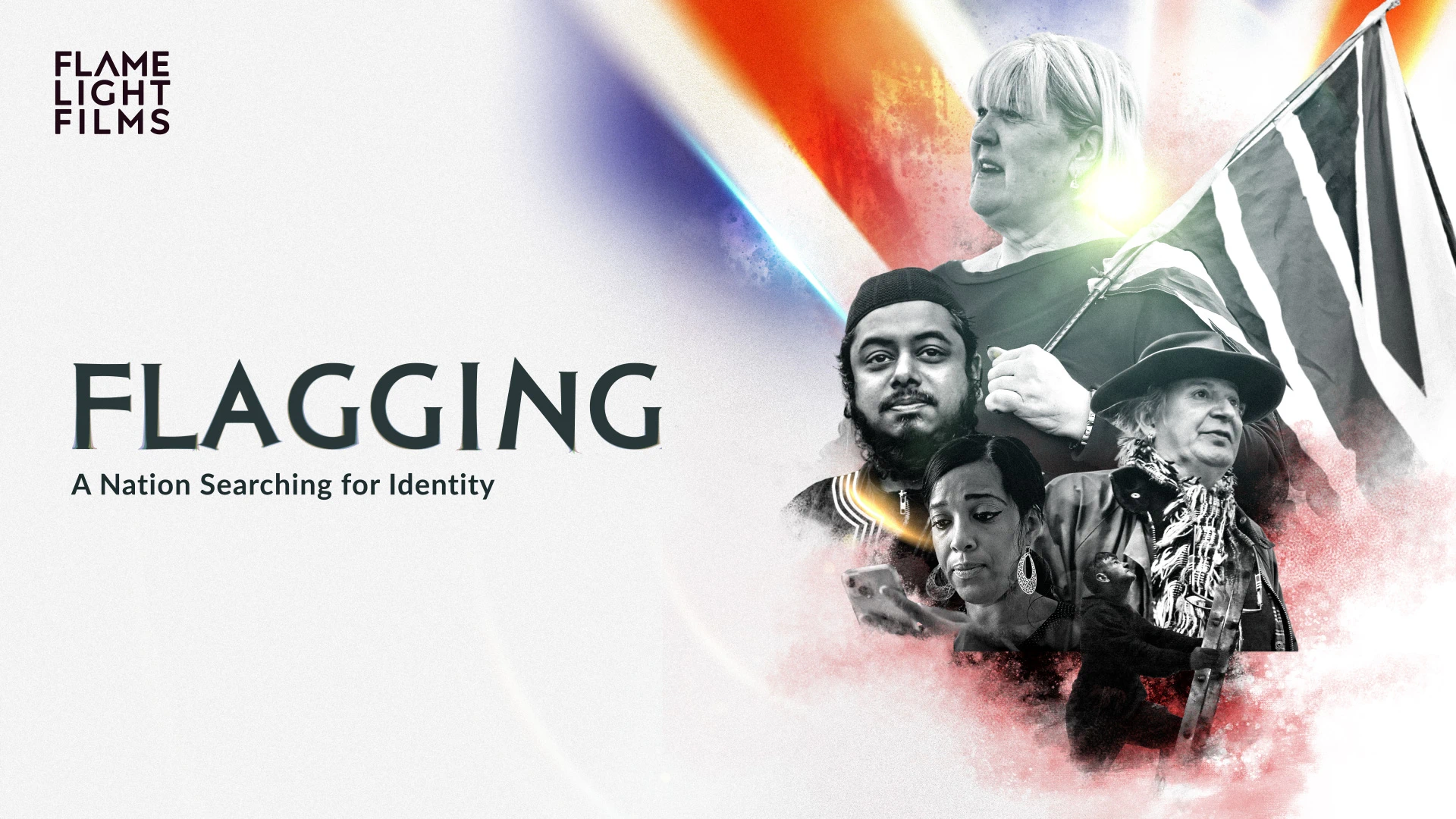
Jon King is a documentary filmmaker based in Greater Manchester, England. His work focuses on producing short, observational documentaries about people who are trying to make the world a better place by doing something unusual or unconventional. His latest film is a documentary about ‘flagging’.
How would you describe 'Flagging: A Nation Searching for Identity' in a single sentence?
Flagging is an observational documentary which explores polarisation and national identity.
What was the inspiration for the project?
Flagging was a little different to my previous films. Instead of focussing on one group of people, I wanted to create a patchwork of stories from around the country which helped build up an overall picture of national identity, and why we are so divided on so many issues.
In the summer of 2025, the Raise the Colours movement saw flags appearing on lampposts all over the country. Rather than just relying on headlines or stereotypes, I wanted to understand why people were putting the flags up - what were their real motivations? But in order to build a full, balanced picture, I knew I needed to expand the film to include individuals with different perspectives. So I decided to film with several people around the country, each with a connection to the national flag.
Where did filming and interviews take place?
Filming took place in locations all around England - mostly in the North, including Birkenhead, County Durham, Blackpool and Greater Manchester.
The film has an observational style - I wanted the film to have a sense of ‘dropping in’ on different people in different places. So filming took place in situations related to their story - in their homes, on the streets, and in their communities.
How did you meet the people you interviewed?
I knew it would be impossible to represent every opinion and viewpoint. But I tried to find people who could each give a unique perspective on the use of the Union Jack and the rise of nationalism. So, after extensive research, I contacted people who had a story which helped to paint part of the overall picture. I approached each of the individuals directly, inviting them to be part of the film.
How did you approach the conversations?
My style of interviewing is always very conversational and observational. I try to listen, rather than leading them towards a particular soundbite. I wanted to give each person the space to not only express their point-of-view, but also the reasons underlying their opinions. I was keen to get a sense of their story, not just their opinions.
What did you expect to find and were your expectations accurate?
I wanted to go into filming with an open mind. I didn’t want to impose my own expectations onto the way people were portrayed.
I expected to find hostility and division. This was most stark when I was filming at a protest in Sheffield, with ‘left’ and ‘right’ protestors kept separated by hundreds of police officers. For me, that scene represents extreme polarisation - with many different social and political issues being conflated into a system of ‘pick-a-side’ tribalism.
But the thing that struck me most was people’s willingness to talk - to share their story with honesty and openness. For me, that was a reminder that listening is an important way of breaking down barriers.
What did you learn from your 'listening exercise'?
My overall impression was that differences are often only surface-level. Each of the people I met genuinely wanted to do the right thing - they were doing what they believed would make the world a better place. But the extreme differences in opinion and perspective were, at times, quite shocking.
I wanted to focus on individual people’s stories, so I chose not to explore the role of social media and online misinformation, but it seemed clear that that was a factor for many in forming such strong opinions. And it was clear that these entrenched positions, on all sides, were being reinforced by an ‘us vs them’ mentality.
What do you want viewers to take away from the film?
I hope the film shows that we do all have a lot in common.
It can be easy to judge people with opposing views. So I hope the film makes people stop and consider why others might see things so differently to themselves.
And I hope the film reminds people that, even if we strongly disagree with each other, it’s important to listen and understand where people are coming from, and have respectful conversations rather than defaulting to hostility and stereotypes.
- ‘Flagging’ is available to watch for free through the Flamelight Films website