
Our Values
Every one of our conversations is different and our way of working is responsive and tailored to the people and place. Here are some things that matter to us:
Focused Attention - every conversation is different and led in a responsive way. We allow time for people to finish speaking, we listen carefully and reflect on what was said - or left unsaid.
Openness - we encourage people to listen to those around them, including those often left out of the conversation; we ensure every person has chance to speak and be listened to; we invite a diversity of opinions, experiences, feelings and thoughts.
Reliability - we try to ensure there is time to build relationships carefully and slowly, being honest about our limits as well as about our skills.
Knowledge-sharing - we work in local and national partnerships and invest time in exploration and evaluation, so that we can keep learning and adapting.
Relevance - we are interested in how people actually experience things, rather than headlines and stereotypes. We respond to how things are and adapt our approach to the context.
Courage - we move towards disagreement and difficulty, making space for people who want to say things that may be uncomfortable or that generate strong feelings.
Every conversation is different and led in a responsive way. We allow time for people to finish speaking, we listen carefully and reflect on what was said - or left unsaid.
We encourage people to listen to those around them, including those often left out of the conversation; we ensure every person has chance to speak and be listened to; we invite a diversity of opinions, experiences, feelings and thoughts.
We try to ensure there is time to build relationships carefully and slowly, being honest about our limits as well as about our skills.
We work in local and national partnerships and invest time in exploration and evaluation, so that we can keep learning and adapting.
We are interested in how people actually experience things, rather than headlines and stereotypes. We respond to how things are and adapt our approach to the context.
We move towards disagreement and difficulty, making space for people who want to say things that may be uncomfortable or that generate strong feelings.
How Our Work is Done
Who is Your Neighbour? holds group conversations in, around and in-between Barnsley, Doncaster, Rotherham and Sheffield.
Who is Your Neighbour? takes time building relationships with people before deciding whether it will be helpful to hold conversations in the place where they live.
Sometimes, there is just one conversation. More often, there are several - because trusting relationships develop over time.
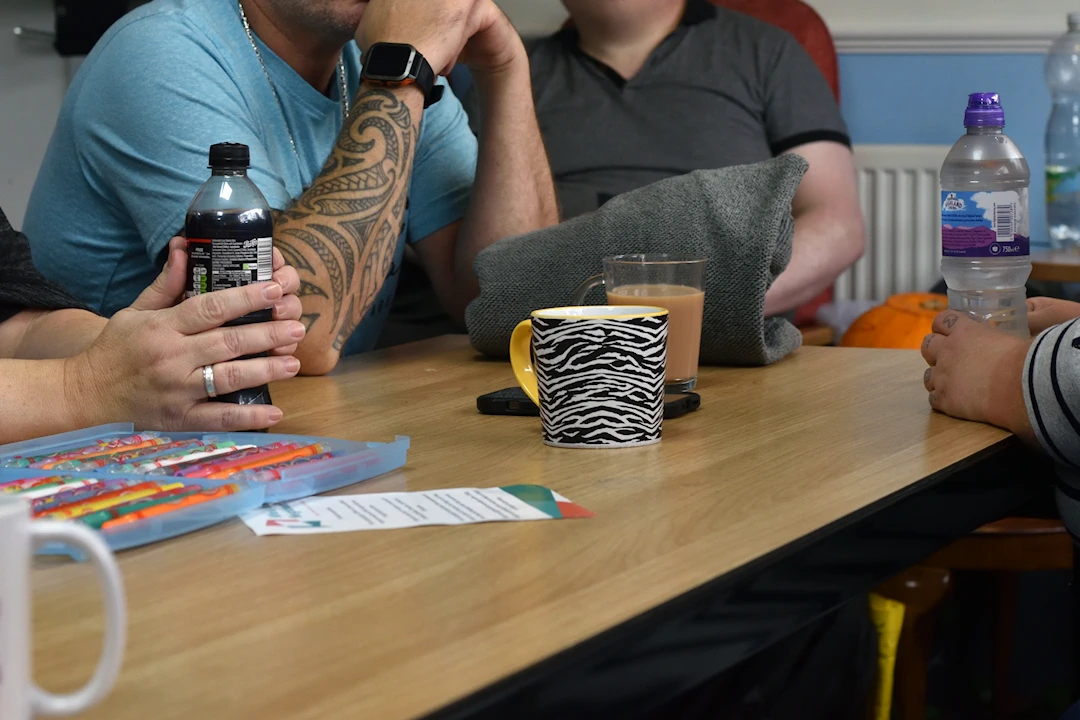
We hold group conversations according to three principles:
- Better Out Than In - we invite people to say what’s on their mind
- Most People Are Alright - we don’t judge, we assume nobody in the conversation intends harm and we ask participants to do the same
- Curiosity Is Good - our conversations are spaces for reflection, thoughtfulness and discovering new things, so we do not persuade or push forward an agenda
Every conversation is different but Who is Your Neighbour? team members always:
- listen
- pay attention
- ask questions
- let people finish
- encourage people to speak with one another (not us)
- keep checking in to ask if people are okay
- invite curiosity about what is not being heard
Conversations are usually facilitated by two members of our team. Sometimes, we use pictures, ice-breakers or an exercise to get things started. A group conversation is usually for 4 – 12 people.
Who We Work With
Every Who is Your Neighbour? conversation is different – there is no ‘typical’ group.
Often, we are invited by people who care about the area where they live and are concerned about challenges their community is facing. We usually work:
- in historically white communities
- in areas that are less well-off
- in places where there are obvious cultural differences and living alongside one another isn’t easy
Many of the people we meet share a feeling that their life experiences and opinions are not taken seriously. They may also want to hold their community together, despite finding it hard to get along. Some or all participants might face challenges – perhaps because of the changes taking place where they live, unemployment, poverty or discrimination.
Often, participants have something in common. They might know each other or be in regular contact because they are neighbours, attend a local community or interest group.